280,000 Texts. 6,000 Calls. One Policy Reversed.

By Nicole Schlinger

Nicole Schlinger

A national faith-based organization was running out of time to stop a proposed expansion of gambling in a state legislature. The campaign needed to reach constituents quickly and give them a clear way to speak up.

The effort targeted 10 legislative districts and included more thanugh Issue Impact Pages. Legislative leaders ultimately abandoned their plans to expand gambling.

A grassroots advocacy campaign needs more than activity

Those numbers matter, but a large number of messages by itself doesn’t tell you whether supporters understand the issue or have a useful way to act. The goal is to connect people who care about an issue with the decision-makers who need to hear from them.

Different tools can do different jobs. Texts can share information and invite a response. Issue Impact Pages can make it easier for constituents to contact legislators. Patch-through calls take supporters directly to a lawmaker’s office.

For public affairs campaigns, timing matters too. A legislative window can close quickly. If a bill is moving, waiting until the last minute to decide how to reach people can leave supporters with no clear next step.

Make it easy to speak up

People are more likely to act when they understand what’s happening and know what they can do about it. The message has to be clear, the action has to be straightforward and the outreach has to reach the right people.

I don’t think of grassroots advocacy as one tactic. It’s a way to organize constituents around a specific goal and make their views known. In this case, the organization used several ways to reach and mobilize supporters while the issue was still in play.

Legislative outcomes are shaped by many factors. But when a client needs people to weigh in, a well-planned campaign can help turn concern into direct constituent action.
45,000 Calls. 3 Days. 1 Congressional Win.

By Nicole Schlinger

Nicole Schlinger

A public affairs team needed to help build support for FIT21 in Congress. There was confusion around the issue, serious headwinds and not much time.

In three days, 45,000 constituents were patched through to lawmakers. The bill passed the House by a vote of 279–136.

Patch-through calls turn support into direct contact

There’s a difference between someone agreeing with an issue and a lawmaker’s office hearing from that person. Patch-through calls help close that gap by connecting constituents directly to the offices making the decision.

That direct action is also measurable. When a program has a target, the team can report how many people were connected. Impressions and online activity can show that people saw something. A completed patch-through means a constituent reached a lawmaker’s office.

For a fast-moving issue, having a clear number to track makes it easier to understand what the outreach delivered and share that result with the client.

Move quickly, but keep the message clear

Speed matters when a bill is moving, but the message still has to make sense to the people receiving it. Supporters need to understand the issue and the action being asked of them. The script and the calling plan have to work together.

The campaign also needs to be ready to adjust as the legislative situation changes. A tight timeline leaves little room to start from scratch once the vote is around the corner.

I’ve seen how quickly public affairs issues can move. A bill can seem distant, then suddenly the window to influence it is measured in days. When that happens, an organized plan and a direct way for constituents to speak up can make a real difference.

3,100 patch-through calls in less than a day

By Nicole Schlinger

A short window to make the case

A public affairs agency was working to help its client stop legislation in five states. They needed to move quickly, and they needed constituents to contact lawmakers’ offices while the issue was still in play.

In less than 24 hours, we helped generate more than 3,100 patch-throughs to lawmakers’ offices. The legislation failed.

The agency was working on behalf of its client, whose legislative priorities were on the line. That distinction matters. Public affairs agencies are responsible for helping their clients deliver results—and they need partners who can step in quickly when the calendar suddenly changes.

Make the next step countable

A patch-through program gives supporters a direct way to contact their lawmaker’s office. The campaign can set a target, use a script built around the client’s message, and connect advocates with the offices that matter.

It also gives the agency a concrete number to report back: how many people were connected. That’s a different kind of measurement from impressions or online activity. Those measures can tell you a message was seen or shared. A completed patch-through shows a person took the next step and reached a lawmaker’s office.

For a fast-moving issue, being able to set a target and report what happened matters. The agency can show its client what the outreach delivered while the legislative fight is still unfolding.

The agency’s secret weapon

We are an amazing secret weapon for public affairs agencies, to get the results their clients want, need, depend on them to get. This is how you deliver to your client what you promised.

That doesn’t mean every campaign will have the same result. The issue, timing, audience and legislative landscape are different every time. But when a client needs direct constituent outreach on a short timeline, a well-run patch-through program can help the agency move quickly and give supporters a clear way to act.

In this case, the agency’s client needed lawmakers to hear from constituents. More than 3,100 people were connected, and the legislation failed.

Emerging Trends and Challenges in Public Affairs Management

Nicole Schlinger

Public affairs professionals have a lot competing for lawmakers’ attention. A policy issue may be complicated, the legislative calendar may be crowded, and the people most affected by a decision may not know how to make their voices heard.

That’s why public affairs management has to include more than making the case behind closed doors. Constituents need ways to understand an issue and communicate directly with the people representing them.

Use digital tools to make action easier

Digital tools can give supporters a simple way to contact lawmakers. An issue page can explain the issue, collect a constituent’s information and send a message to the appropriate office.

The tool matters, but so does the message. Supporters should understand what they’re contacting their lawmakers about and why the issue matters. A clear, useful call to action is more valuable than asking someone to click without giving them context.

Use data to make better decisions

Public affairs teams need a way to learn what constituents think. Polling is one option, but it isn’t the only one. Text conversations and surveys can help organizations learn who supports an issue, what questions people have and which messages are resonating.

That information can help shape what the team does next. It’s hard to plan effective outreach if you’re guessing about the audience.

Don’t overlook the phone

Phones create an opportunity for a real conversation. A telephone town hall can bring many people into a discussion at once, let them hear from leaders and give them a chance to ask questions. Patch-through calls can connect supporters directly to lawmakers’ offices.

Those tools don’t replace other public affairs work. They give constituents additional ways to take part. When lawmakers hear from constituents through calls, emails and local conversations, they get a clearer picture of how an issue is affecting people back home.

The challenge is to use the right tool for the situation. Digital pages can make it easier to act. Data can help a team decide where to focus. Calls can bring a personal voice into the conversation. A strong public affairs plan knows how to use each one.


Grassroots Tactics to Advance Your Policy Agenda

By Nicole Schlinger

Nicole Schlinger

Getting a message in front of people is one thing. Giving them a clear way to act on it is another.

In public affairs, elected officials need to hear from the constituents they represent. That can take more than one form: patch-through calls, peer-to-peer texting, telephone town halls and door-to-door outreach can all help people speak up about an issue.

The tools matter, but they aren’t the whole plan. You need the right people, a clear script and consistent messaging. Otherwise, you can spend a lot of money creating activity without giving advocates a useful next step.

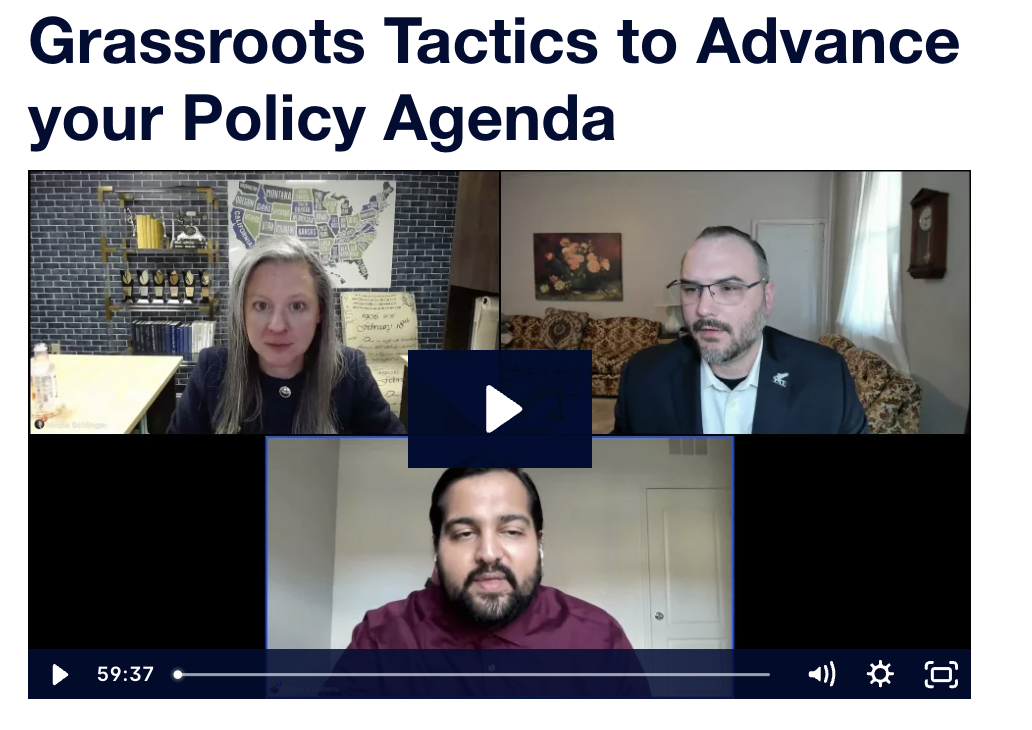
Ted Patterson of Young Americans for Liberty and I discussed how campaign-style tactics can help organizations mobilize people around policy issues in this Campaigns & Elections feature.